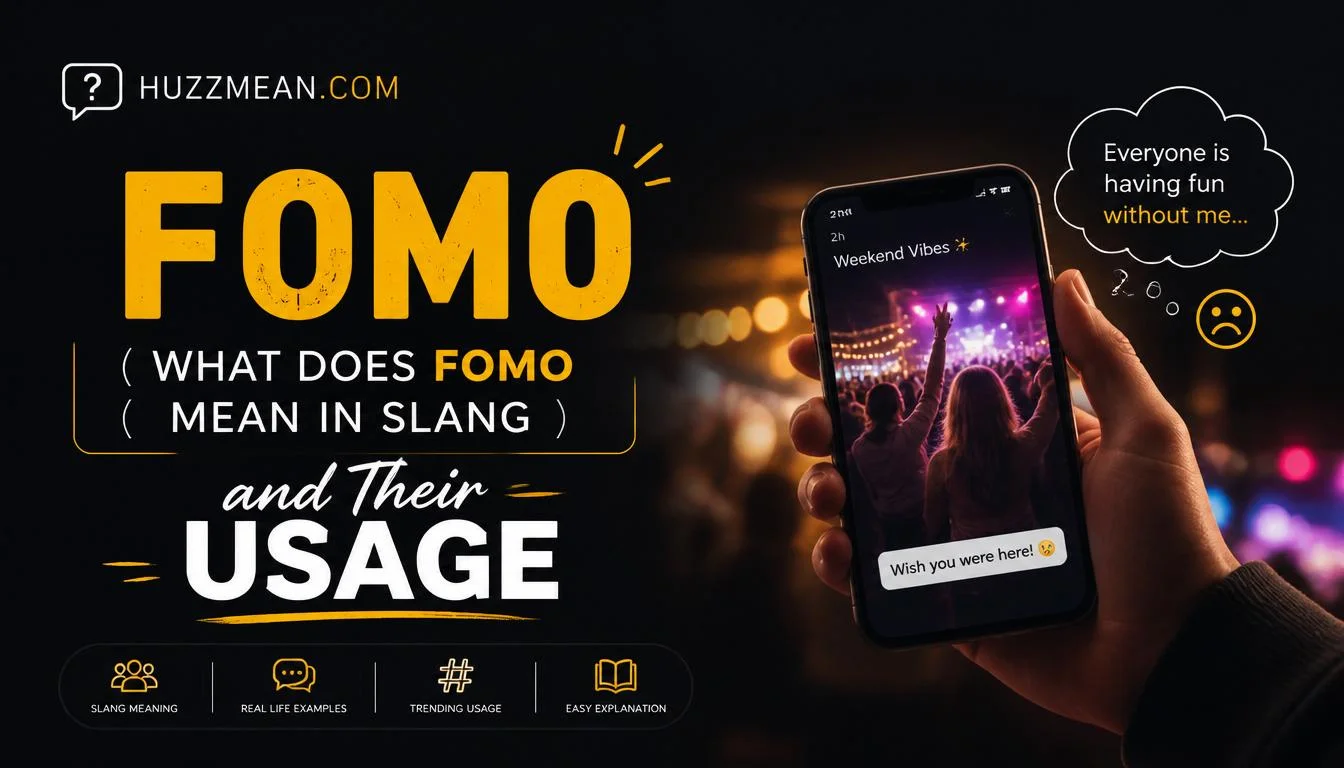
FOMO means “Fear of Missing Out.” It’s a popular internet slang term used when someone feels worried that they’re missing an exciting event, experience, trend, or opportunity. People often see it on TikTok, Snapchat, Instagram, and in everyday text messages.
The term has become extremely common online because social media constantly shows people what others are doing. Seeing friends travel, attend parties, or join viral trends can sometimes create feelings of missing out.
Many people search for the meaning of FOMO because they see it in comments, captions, memes, and chats. While the word is simple, its meaning can vary depending on the conversation.
In this guide, you’ll learn exactly what FOMO means, where people use it, how to reply to it, and why it has become one of the most popular slang terms on the internet.
FOMO Meaning in Text
FOMO stands for Fear Of Missing Out.
It is both an acronym and a slang term. The phrase describes the feeling that other people are enjoying experiences, opportunities, or events while you are not included.
In everyday texting, FOMO is usually used when someone wishes they could participate in something happening around them.
For example:
“I saw everyone’s beach photos and got major FOMO.”
In this case, the person feels left out because others were having fun without them.
The term can refer to:
- Missing a party
- Missing a social event
- Missing a trend
- Missing a sale or promotion
- Missing a travel opportunity
- Missing a group activity
Today, FOMO is one of the most recognized slang expressions online.
Where People Use FOMO
TikTok
TikTok is one of the biggest sources of FOMO.
Users constantly share videos of vacations, concerts, restaurants, and trending experiences.
Example:
“Everyone is at that festival and my FOMO is real.”
Snapchat
Snapchat stories often show friends hanging out together.
When someone sees an event they weren’t invited to, they may jokingly mention FOMO.
Example:
“Your story just gave me serious FOMO.”
Instagram is famous for carefully selected photos of exciting moments.
Many users describe feeling FOMO after scrolling through their feeds.
Example:
“These vacation pictures are giving me FOMO.”
Group chats frequently include discussions about plans and events.
Example:
“You guys went without me? Now I’ve got FOMO.”
SMS
People use FOMO in normal text conversations as well.
Example:
“Send more pictures. My FOMO is getting worse.”
Real Chat Examples
Example 1
A: We all went bowling last night.
B: Seriously?
A: Sorry, now you probably have FOMO.
Example 2
A: Look at these concert photos.
B: Stop, you’re giving me FOMO.
A: It was amazing.
Example 3
A: Everyone’s talking about that new show.
B: I haven’t watched it yet.
A: Sounds like FOMO kicking in.
Example 4
A: We’re planning a weekend trip.
B: That sounds fun.
A: Don’t get FOMO if you can’t come.
Example 5
A: Did you see the festival videos?
B: Yes.
A: Massive FOMO, right?
Example 6
A: Everyone bought the new game.
B: I haven’t.
A: I bet you’re feeling FOMO.
Example 7
A: My friends are traveling across Europe.
B: Lucky them.
A: It’s giving me serious FOMO.
Example 8
A: We had pizza and movie night.
B: Why wasn’t I invited?
A: Uh-oh, FOMO alert.
Example 9
A: Did you join the livestream?
B: No, I missed it.
A: That’s enough to cause FOMO.
Example 10
A: The tickets sold out.
B: No way.
A: Now everyone has FOMO.
How to Reply When Someone Says “FOMO”
Funny Replies
- Don’t worry, I’ll post enough photos for everyone.
- FOMO builds character.
- Consider it exclusive content.
Casual Replies
- I know the feeling.
- Hopefully you’ll make the next one.
- It happens to all of us.
Friendly Replies
- We should plan something together soon.
- I’ll invite you next time.
- Don’t worry, you’re not missing much.
Neutral Replies
- That’s understandable.
- Many people feel that way sometimes.
- Social media can make FOMO stronger.
Is FOMO Rude or Offensive?
No, FOMO is not considered rude or offensive.
It is a widely accepted slang term used in casual conversations.
Most people use it humorously or casually when talking about missed experiences.
It is generally safe to use:
- With friends
- On social media
- In text messages
- In casual workplace conversations
However, it may sound too informal for very professional business communication.
In school and everyday conversations, it is usually perfectly acceptable.
Who Uses This Term?
Gen Z Usage
Gen Z uses FOMO frequently.
Because younger users spend a lot of time on social media, the term naturally appears in conversations about trends, events, and online culture.
Millennials
Millennials helped popularize FOMO during the rise of Facebook, Instagram, and smartphone culture.
Many still use it regularly.
Older Adults
Older generations understand the term as well, although they may use it less frequently.
Common Platforms
You’ll often find FOMO on:
- TikTok
- Snapchat
- X (Twitter)
- SMS messages
How Often It Appears Online
FOMO remains extremely common.
It appears in:
- Memes
- Captions
- Comments
- Influencer content
- Marketing campaigns
- Everyday conversations
The term has become part of modern internet vocabulary.
Origin of the Term
The phrase “Fear Of Missing Out” existed before social media became popular.
However, the acronym FOMO gained widespread attention during the early days of online networking and smartphone culture.
As platforms like Facebook and Instagram grew, people were constantly exposed to updates about other people’s lives.
This made feelings of exclusion more visible than ever before.
Internet culture helped transform the phrase into a popular slang term.
Today, marketers, influencers, psychologists, and everyday users all recognize the term.
Unlike some internet slang with unclear origins, FOMO has a well-documented history and meaning.
Its popularity continues because the feeling it describes is something almost everyone experiences.
Comparison Table
| Term | Meaning | Type | Usage | Popularity |
|---|---|---|---|---|
| FOMO | Fear Of Missing Out | Acronym/Slang | Feeling left out | Very High |
| IDK | I Don’t Know | Acronym | Casual texting | Very High |
| IDC | I Don’t Care | Acronym | Informal conversations | High |
| IMO | In My Opinion | Acronym | Sharing opinions | High |
| BRB | Be Right Back | Acronym | Temporary absence | Very High |
Real-World Usage Example
Imagine your friends attend a music festival while you’re busy studying for exams.
Later that evening, they post photos, videos, and stories showing the performances, food, and fun activities.
As you scroll through social media, you think:
“I wish I could have gone. I’m getting major FOMO.”
In this situation, FOMO describes the feeling of missing an experience that others are enjoying.
This is one of the most common ways the term is used in everyday life.
Frequently Asked Questions
What does FOMO mean in text messages?
FOMO stands for Fear Of Missing Out. It describes feeling left out of an event, experience, or opportunity.
What does FOMO mean on TikTok?
On TikTok, FOMO usually refers to wanting to join a trend, event, challenge, or experience that others are enjoying.
Is FOMO slang?
Yes. FOMO is a popular internet slang term and acronym.
Is FOMO rude or offensive?
No. It is generally considered harmless and appropriate in casual conversations.
How should you reply to FOMO?
You can respond with reassurance, humor, or understanding depending on the situation.
Conclusion
FOMO stands for Fear Of Missing Out, a popular slang term used when someone feels left out of an event, experience, trend, or opportunity. It has become a major part of internet culture and appears regularly on TikTok, Snapchat, Instagram, WhatsApp, and in text messages.
People use it to describe the feeling of watching others enjoy something they wish they could experience too. Most of the time, it’s used casually and humorously.
Because the term is friendly and widely understood, it’s generally safe to use in everyday conversations. However, in formal professional settings, a more traditional phrase may be a better choice.
Understanding FOMO helps you navigate modern online conversations and social media culture with confidence.
DISCOVER MORE ARTICLES
What Does the Number 7 Mean in the Bible? Explained 2026